
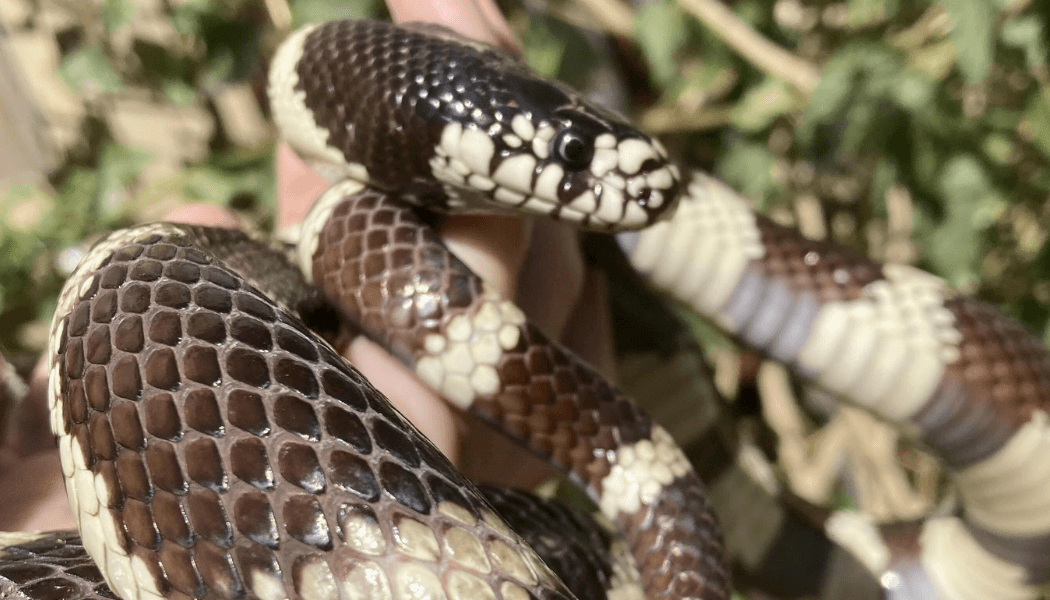
Kingsnake (Lampropeltis spp.) Care Guide
A Comprehensive Overview for Responsible Ownership
Kingsnakes are a diverse group of colubrid snakes. They are known for their vibrant patterns, strong feeding responses, and adaptable nature, making them excellent choices for reptile keepers of various experience levels. This guide outlines general care practices for 2 commonly kept kingsnake species, the California King and the Mexican Black.
Quick Reference
- Enclosure Size:
Adults: Minimum 36"x18"x18"; smaller enclosures for hatchlings may be suitable temporarily.
Note: Kingsnakes are excellent escape artists. Secure all gaps in the enclosure.
- Temperature Gradient:
Basking area: 84–88°F
Cool side: 74–78°F
- Humidity:
Maintain 40–60% relative humidity
Provide a humid hide during shedding
- Substrate:
Aspen, coco coir, repti-bark, cypress mulch, or a naturalistic mix of topsoil, sand, and sphagnum moss
Frozen-thawed rodents (appropriately sized), occasionally supplemented with reptile-safe variety (e.g., chicks or repti-links, depending on species and individual)
Feed juveniles twice per week; adults once per week
- Water:
Fresh, clean water should always be available
- Enclosure Enrichment:
At least two hides (warm and cool side), branches, logs, tunnels, and plants for enrichment
Enclosure/Housing Recommendations
Kingsnakes from various regions of North America share similar care needs in captivity. Most adult kingsnakes will thrive in a 36" x 18" x 18" enclosure. The enclosure should be escape-proof, as kingsnakes are known for exploiting even tiny gaps.
Substrate choices and environmental complexity should reflect their natural behaviors—most kingsnakes are ground dwellers and burrowers but may explore climbing structures when offered.
Temperature and Heating
All kingsnake species require a thermal gradient:
- Basking Spot: 84–88°F
- Cool Side: 74–78°F
Use a temperature gun to monitor surface and hide temperatures. Heating should be regulated with a thermostat to prevent overheating. Overhead heat sources (e.g., basking lamps) are generally preferred for naturalistic warming.
Maintain general humidity levels between 40–60%, which suits the needs of most kingsnake species. Provide a humid hide with damp sphagnum moss to support clean, complete sheds. This is especially important during the pre-shed cycle.
Suitable substrates include:
- Aspen bedding (great for burrowing and odor control)
- Cypress mulch
- Coco coir
- Bioactive mixes: organic topsoil, sand, sphagnum moss
The substrate should retain moderate humidity while allowing for burrowing and spot cleaning.
Enrichment and Environmental Stimulation
All kingsnakes benefit from a stimulating environment. Provide:
- Multiple hides
- Climbing opportunities
- Tunnels, cork bark, branches, or artificial foliage
- Enrichment objects (e.g., puzzle toys or scent trails)
Some keepers also offer secure supervised exploration in play pens or controlled environments to allow additional activity.
Kingsnakes typically live 15–20 years in captivity with proper care. Most adults reach 3–4 feet in length, though some subspecies or individuals may grow larger.
While individual temperament varies, most kingsnakes are active, alert, and food-driven. Some snakes are particularly bold and easy to handle, while others may be more reclusive or shy at first. Regular, gentle handling typically results in confident, well-adjusted snakes.
Kingsnakes are opportunistic feeders and may display strong feeding responses. Tap training is often recommended to help differentiate feeding time from handling. Always supervise feeding to ensure the snake does not strike in error.
Tap Training: Use a snake hook or even something like a chopstick to gently tap it on the head before pulling out. With repetition the snake will learn that when they are tapped, it is not feeding time – it’s handling time.
Due to their tendency to prey on other reptiles—including other snakes—kingsnakes should never be housed with other reptiles, even of their own species.
Kingsnakes are carnivores and thrive on a varied but consistent diet. Frozen-thawed rodents (mice or rats) are ideal. Some species may also accept reptile-safe chicks or quail. Repti-links are also a great and healthy option for variety.
Feed juveniles twice a week and adults once per week. Adjust feeding frequency based on growth rate, activity level, and body condition. The size of the rodent should be approximately the same width of the widest part of the snake. Avoid handling for 24–48 hours after feeding.
Allow new snakes at least 1–2 weeks to acclimate to their enclosure before beginning regular handling. Keep the environment quiet, with minimal disturbance, and ensure all husbandry conditions are stable. Once the snake is feeding consistently and exploring calmly, handling can begin gradually.
Observe Your Snake
The best husbandry practices are guided by observation. If your kingsnake is eating, shedding well, and behaving normally, your setup is likely appropriate. If not, re-evaluate humidity, enclosure security, environmental enrichment, or stress factors.
Kingsnakes are resilient, engaging, and rewarding reptiles that thrive in well-maintained enclosures with attentive care. While their needs are generally straightforward, every individual is unique. By observing behavior and adjusting accordingly, you can provide your kingsnake with a healthy and enriching life.
Disclaimer
This guide represents general best practices for two commonly kept kingsnake species. Individual needs may vary. Continue researching from a variety of credible sources, consult experienced keepers, and always seek veterinary advice when in doubt.
Kingsnakes & Milksnakes in Captivity - Robert Applegate (with Craig Trumbower)
You can also contact the Phoenix Herpetological Sanctuary if you have any questions!
PHS: 480-513-4377