
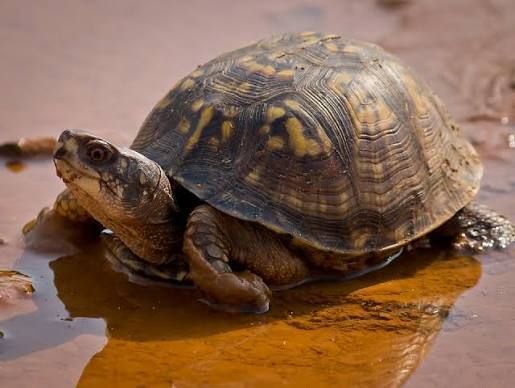
Box Turtle (Terrapene spp.) Care Guide
A Comprehensive Overview for Responsible Ownership
Box turtles are medium-sized, terrestrial reptiles native to forested and grassy regions of North America. Known for their high-domed shells and unique ability to fully close themselves inside, box turtles are long-lived, personable, and curious animals. They require specific conditions to remain healthy and active in captivity.
Quick Reference
• Enclosure Size:
Hatchlings: 36” x 18” minimum indoor enclosure
Adults: 4 ft x 3 ft minimum indoor enclosure; outdoor pens are strongly encouraged in appropriate climates, with secure fencing and shaded microhabitats
• Temperatures:
Daytime ambient: 75-85°F
Basking spot: 88-90°F
Nighttime minimum: No lower than 65°F indoors; outdoor turtles can tolerate cooler nights if dry and sheltered
• Humidity:
60-80% average; higher humidity is essential, especially for younger turtles and during shedding. These guys need humidity!
• Substrate:
Indoors: A mix of organic topsoil, coconut coir, and leaf litter works well. Substrate should retain moisture while allowing for burrowing
• Diet:
Omnivorous: Mix of dark leafy greens, vegetables, fruits, and high-quality animal protein (insects, worms, or low-fat protein sources)
• Water:
Shallow water dish available at all times, large enough for soaking. Mist daily and soak juveniles 3-4 times a week
• Shelter/Hide:
Provide multiple hides and shaded areas in both indoor and outdoor enclosures. Offer moist retreats for thermoregulation and comfort
Housing and Space Recommendations
Box turtles are surprisingly active and thrive in large, stimulating enclosures. While indoor housing can suffice, outdoor habitats are preferred where the climate allows. They enjoy exploring, burrowing, and soaking, so offer a complex and enriching space.
• Outdoor pens must be predator-proof with partial sun/shade areas, edible plants, logs, and leaf litter. Sides should be at least 12" tall and buried 6" deep to prevent digging escapes
• Indoors, use tortoise tables or large tubs with natural substrate, proper lighting, and humidity-retaining materials like moss and bark.
Indoor Temperature and Heating
Box turtles need a controlled temperature gradient to regulate body functions and digestion.
• Basking Zone: 88-90°F under a heat bulb or ceramic heat emitter
• Ambient Temp: 75-85°F
• Nighttime Temp: Not below 65°F
UVB lighting is essential indoors: use a 10.0 T5 HO linear UVB bulb or mercury vapor bulb for 10-12 hours per day to support shell health and metabolic functions
Box turtles need moderate to high humidity, especially when housed indoors. Dehydration is a common health issue in dry environments.
• Maintain 60-80% humidity with daily misting, damp moss, and partially enclosed hides
• Provide a clean, shallow soaking area large enough for the turtle to sit in
• Soak hatchlings every other day and adults at least weekly, more often if kept indoors or during dry spells
Feeding and Diet
Box turtles are omnivores and require a balanced mix of plant and animal matter. Variety is key.
• Staples: Dandelion greens, collards, turnip greens, squash, mushrooms, earthworms, snails, and insects
• Occasional Additions: Strawberries, blueberries, mango, mealworms, hard-boiled egg (small amounts)
• Avoid: Dog/cat food, processed meat, iceberg lettuce, and citrus fruits
• Calcium: Dust food with calcium powder (without D3 if UVB is used, with D3 if not) 2-3 times per week; cuttlebone can be provided for free-choice nibbling
• Feed every other day for adults; daily for growing juveniles
Enrichment and Environmental Stimulation
Box turtles are curious and benefit from varied environments that encourage movement, foraging, and natural behavior.
• Enrichment Ideas: Leaf piles, edible flowers, logs, tunnels, live bugs
• Moist Hides: Provide shaded, humid hides made with sphagnum moss or bark mulch
• Rotate food locations and terrain features to encourage exploration
Box turtles can grow to 5-7 inches long and are long-lived companions. With proper care, they regularly exceed 40–50 years in captivity, and some individuals have lived more than 80 years. Commitment is essential.
Box turtles have distinct personalities. Some are bold and outgoing; others are shy and reclusive.
• Handle gently and sparingly, especially new arrivals
• Let them explore on their own terms; overhandling causes stress
• Never pull or pry a turtle from its shell or force it to open - this causes pain and fear
When introducing a new turtle to its home, allow 7-10 days of hands-off acclimation.
• Provide warmth, humidity, secure hides, and fresh food
• Monitor weight, appetite, activity, and stool
• Gradually increase interaction once the turtle begins exploring and eating normally
Box turtles are intelligent, sensitive animals that thrive under the right conditions. With consistent care, they become fascinating and charismatic additions to your home or garden. Their long lifespans mean they often become lifelong companions, requiring a deep level of responsibility and planning.
This guide outlines general care practices for Russian tortoises. Individual care needs may vary depending on age, health, environment, and other factors. Continue learning from reputable sources, experienced keepers, and herpetological veterinarians to provide the best care possible.
Additional Reading
North American Box Turtles in Captivity – E.P. Bartolotti
Box Turtles – Tess Cook
You can also contact the Phoenix Herpetological Sanctuary if you have any questions!
PHS: 480-513-4377