
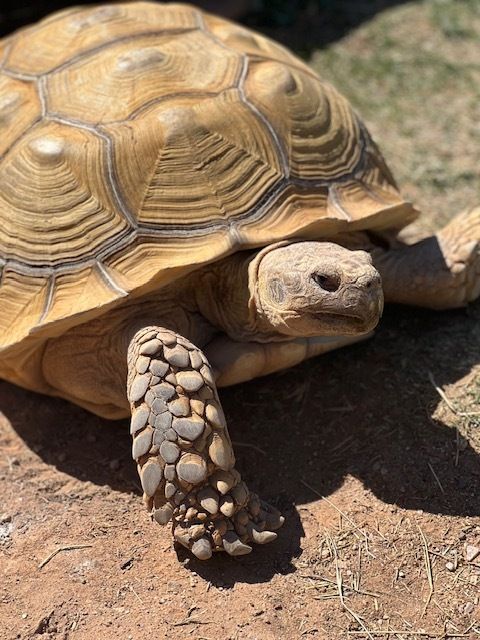
Sulcata Tortoise (Centrochylys sulcata) Care Guide
A Comprehensive Overview for Responsible Ownership
Sulcata tortoises are large, terrestrial reptile’s native to the southern edge of the Sahara Desert in Africa. They are known for their long lifespans, substantial size, and unique personalities. They are also known for their excessive digging ability to re-landscape a yard and dig into your house’s foundation. Think of the sulcata like a gopher that gets to 150-200 lbs and makes ginormous tunnels and holes in the yard.
Knowledge of proper husbandry is essential for promoting long-term health and well-being. For not just your sulcata, but you as well.
Quick Reference
- Enclosure Size:
Juveniles to Adults: Outdoor pens preferred with at least a half-acre of land. Indoor pens should be a minimum of 8 ft x 4 ft if they need to be brought inside for any reason. These are very active giant tortoises.
- Temperatures:
Daytime ambient: 80–95°F Make sure there is access to shade.
Basking spot: 100–110°F
Night time minimum: Not below 65°F. Bring indoors when temperatures drop below that - or build a “house” with heating above such as in a doghouse with plastic flaps.
- Humidity:
Adults are 40–60%, always with a dry basking area. Make sure they have access to large shallow water areas.
- Substrate:
The ground outside should allow for burrowing and extensive digging.
- Diet:
Primarily high-fiber, low-protein grasses and hays. Supplement with dark leafy greens. Avoid fruit, animal protein, and high-oxalate vegetables like spinach and kale.
- Water:
Fresh water should always be available in a shallow dish. PHS often uses plastic water heater pans found at Home Depot or Amazon. Juveniles should be soaked in shallow warm water 3–4 times a week.
- Shelter/Hide:
Provide access to a hide or burrow to retreat from heat and to feel secure. Outdoor shelters must be insulated and heated in cooler climates.
Detailed Care Guidelines
Housing and Space Recommendations
Sulcata tortoises grow rapidly and require significant space. Adults must be kept outdoors as they mature. Outdoor pens should be secure, escape-proof, and provide a variety of terrain for exploration, grazing, and digging. They will also need access to water, underground tunnels or a lean-to, or even a large doghouse to provide shade and cooler temperatures to regulate their body temperature. In the winter, heat should be installed above so they don’t get too cold.
Tortoises are powerful diggers and may attempt to burrow under fencing. Barriers should extend at least 12 inches below ground. More is better.
Sulcatas are ectothermic and rely on external heat to regulate body temperature. This means that they use different air temperatures for what they need. They seek different temps for basking, sleeping, digestion, rest, and activity as necessary. Inadequate heating and temp choices lead to illness and poor appetite.
- Basking Zone: Basking range is of 100–110°F
- Ambient Temperature: Air temperatures out of direct sunlight are 80–95°F
- Nighttime Temperature: Should not drop below 65°F. Bring inside or provide a heated place outside. Some people outfit doghouses or sheds with overhead heating panels. Do some research to learn how to do this safely.
Humidity and Hydration
Sulcatas come from arid regions, but as hatchlings, they can develop pyramiding if they aren’t given both proper nutrition and enough water for soaking.
- Adults: Must have access to a water source and an environment that allows them to rehydrate as needed. You can use plastic water heater pans. In addition, you can use your hose to soak a recessed part of the yard so they can walk in and soak in the muddy water as needed.
Feeding and Diet
Sulcata tortoises are grazing herbivores. A proper diet consists of:
- Primary Diet: Grasses, hay (e.g., Bermuda, timothy, orchard), and edible weeds like dandelion and clover.
- Supplemental Greens: Mustard greens, collard greens, escarole, turnip greens (rotate regularly).
- Avoid: Fruits, grains, legumes, and vegetables high in oxalates (e.g., spinach, kale, beet greens).
- Calcium Supplementation: Provide 3x a week. Use a phosphorus-free calcium powder or offer cuttlebone.
Feed daily and allow tortoises to graze naturally outdoors.
Enrichment and Environmental Stimulation
Sulcatas benefit from varied terrain and safe objects to explore. Their environment should encourage natural behaviors, including grazing, digging and burrowing, and basking.
- Enrichment Items: Mounds of dirt or sand, safe logs or branches, shaded areas, and visual barriers. Some like playing with balls – the same type you would buy for horses.
- Burrows and Hides: Provide shaded, cool burrowing areas or insulated hides. In cold climates, heated tortoise houses are required.
Lifespan and Size
Sulcata tortoises are long-lived, with lifespans commonly exceeding 70 years under proper care. They are among the largest tortoises in the world, with adult weights of 80 to 150+ pounds and lengths over 24 inches. Prospective keepers must prepare for the long-term commitment and significant space requirements in order to keep them from entering rescue’s and sanctuary’s.
Handling and Temperament
Sulcatas are generally active during the day and may display inquisitive, bold personalities. They are not naturally aggressive but may become very territorial, especially males. Once they trust you, they often enjoy gentle scratching under the chin and neck, as well as stroking their shells. Yes, they can feel it!
- Avoid picking up large tortoises unless necessary—they are heavy and will be injured if dropped.
Bringing Home a New Tortoise
When bringing a new Sulcata home, allow the tortoise to adjust quietly to its new environment for 7–10 days. During this period, you should observe from a distance and avoid handling. Gradual acclimation helps reduce stress and supports long-term health. Make sure your new Sulcata is eating and drinking appropriately before starting interactions.
Sulcata tortoises are rewarding but demanding reptiles that require a significant investment of time, space, and resources. Before acquiring one, ensure that you are prepared to meet their needs for decades. When provided with proper care, these tortoises can thrive and become engaging lifelong companions.
Disclaimer
This guide represents general best practices for Sulcata tortoises. Individual needs may vary based on age, temperament, and how the husbandry needs are met. Continue researching from a variety of credible sources, consult experienced keepers, and be open to adapting your methods over time. Always consult a veterinarian when necessary!
Additional Reading
SULCATAS: African Spurred Tortoises in Captivity - By Russ Gurley
Sulcata and Leopard Tortoises – E.J. Pirog
You can also contact the Phoenix Herpetological Sanctuary if you have any questions!
PHS: 480-513-4377